RIDEBENCHMARK
Menu

Independent riding perspective • Specs checked, claims labeled

Electric scooters and dirt bikes, without the guesswork.

The spec sheet tells you what a machine promises. We focus on what buyers actually need to understand: how it rides, what it costs to own, what can go wrong, and which tradeoffs matter before you spend thousands.

Rider-owned. Every number labeled by where it came from.

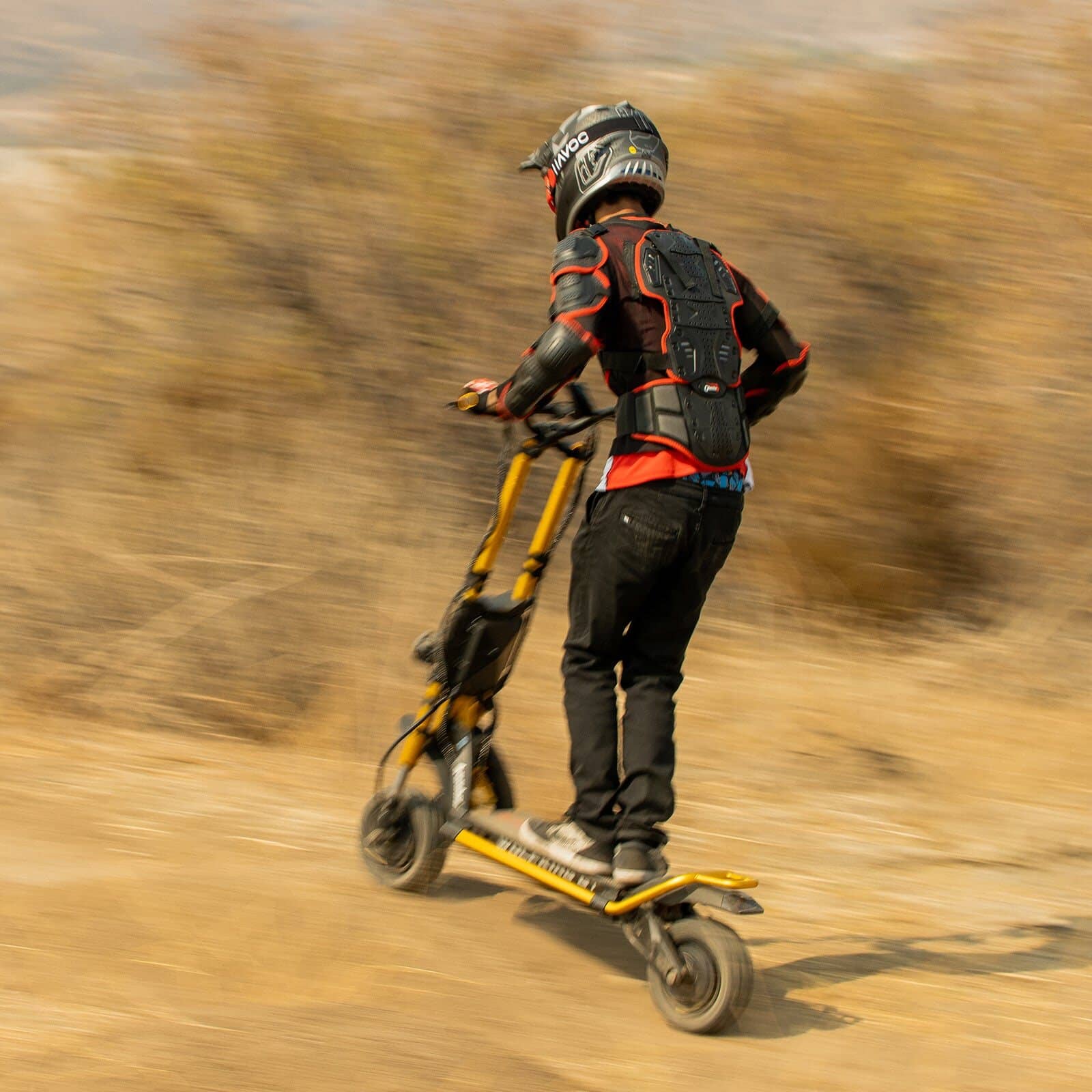
A rider in a full-face helmet and body armor stands on a gold Kaabo King GT Pro scooter, speeding along a dusty dirt trail with motion-blurred dry brush behind.
Manufacturer photo: Kaabo USA

Our rides

Start with the machines we actually know.

RideBenchmark begins where the owner has real seat time: one dual-motor performance scooter and one electric dirt bike. Below, first-hand context sits apart from the manufacturer’s published figures, so you always know which is which.

01 / Performance electric scooter

Owned & ridden· Owner riding experience
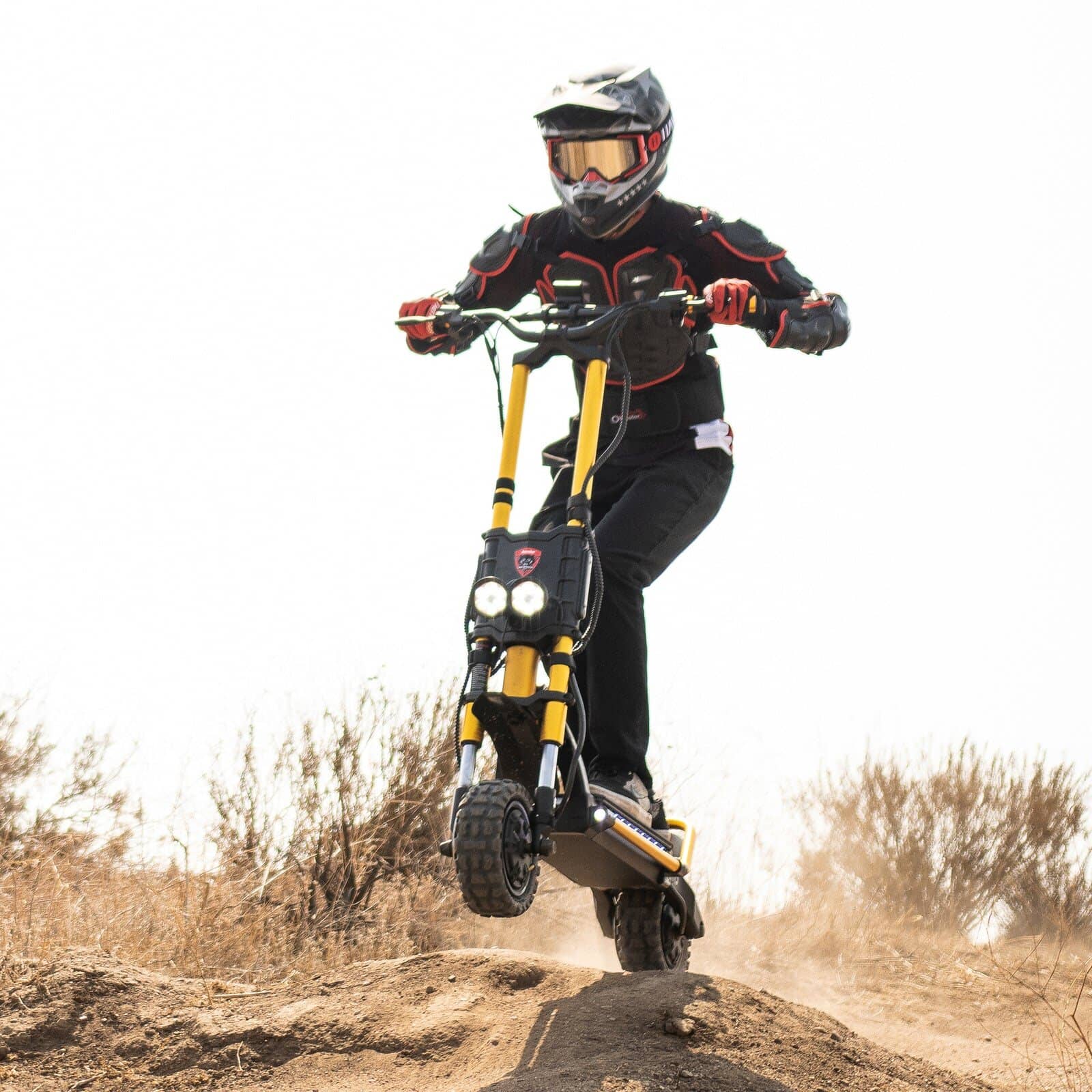
A rider in motocross gear lifts the front wheel of a gold Kaabo King GT Pro scooter over a dirt berm, twin headlights facing the camera.
Manufacturer photo: Kaabo USA

Kaabo King GT Pro

Also sold and searched as the Kaabo Wolf King GT Pro

The King GT Pro is Kaabo’s heavy, dual-motor, full-suspension scooter — the kind of machine people cross-shop with small motorcycles, not commuter scooters. It is also the scooter the owner of this site has ridden, and older riding footage lives on the Road to Trail channel.

Our long-form coverage will separate what we observed from what Kaabo publishes. We won’t substitute an unmeasured claim for a range test, and we’ll say plainly when something is unknown.

What we look at first

  1. 01How the advertised range compares with the conditions it was rated under
  2. 02What a heavy dual-motor scooter means for stairs, car trunks and storage
  3. 03Brake, tire and suspension setup for the terrain you actually ride
  4. 04Parts, service options and warranty terms from the seller you buy from
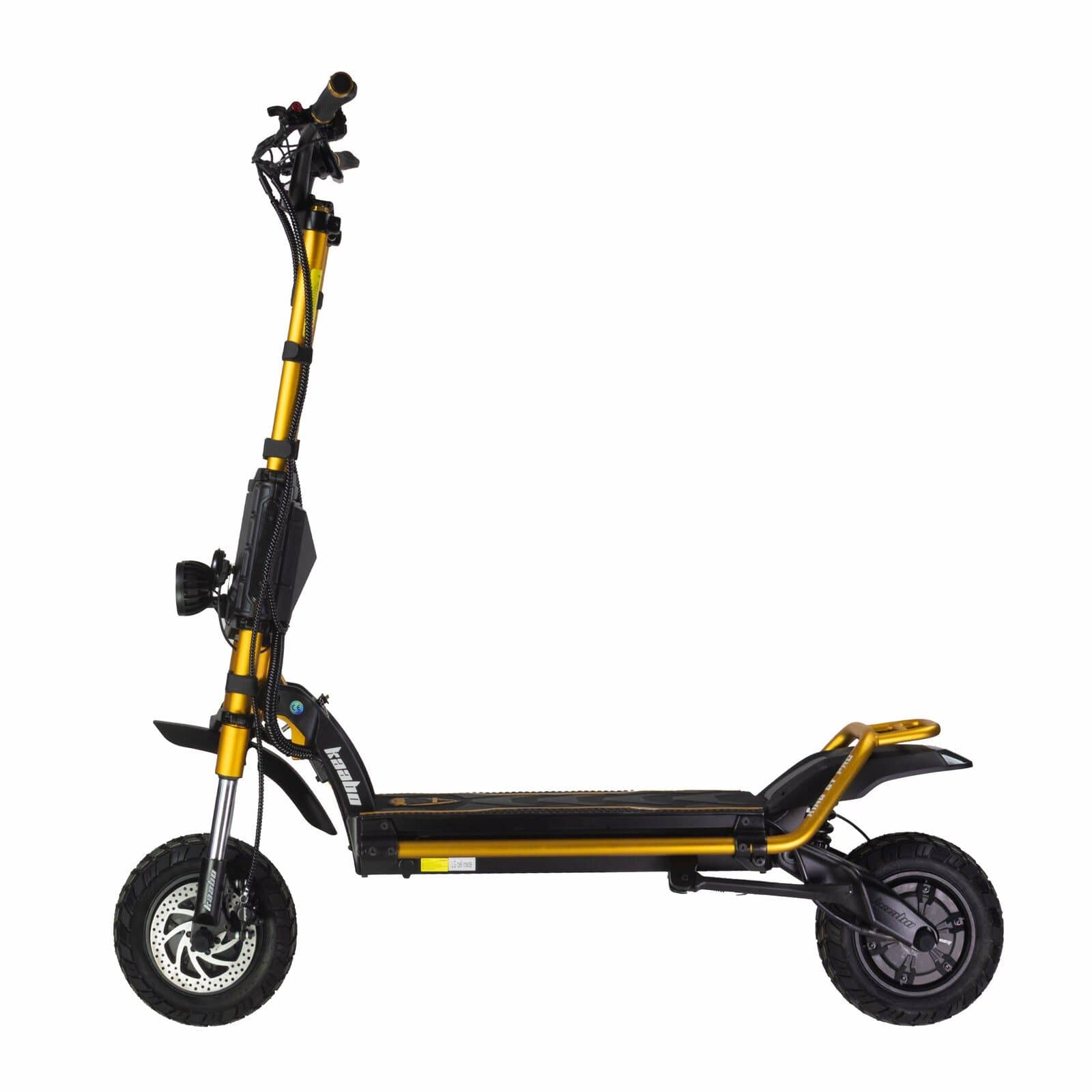
Side profile of a gold Kaabo King GT Pro scooter on a white studio background, showing the long deck, front suspension fork and knobby tires.
Manufacturer photo: Kaabo USA
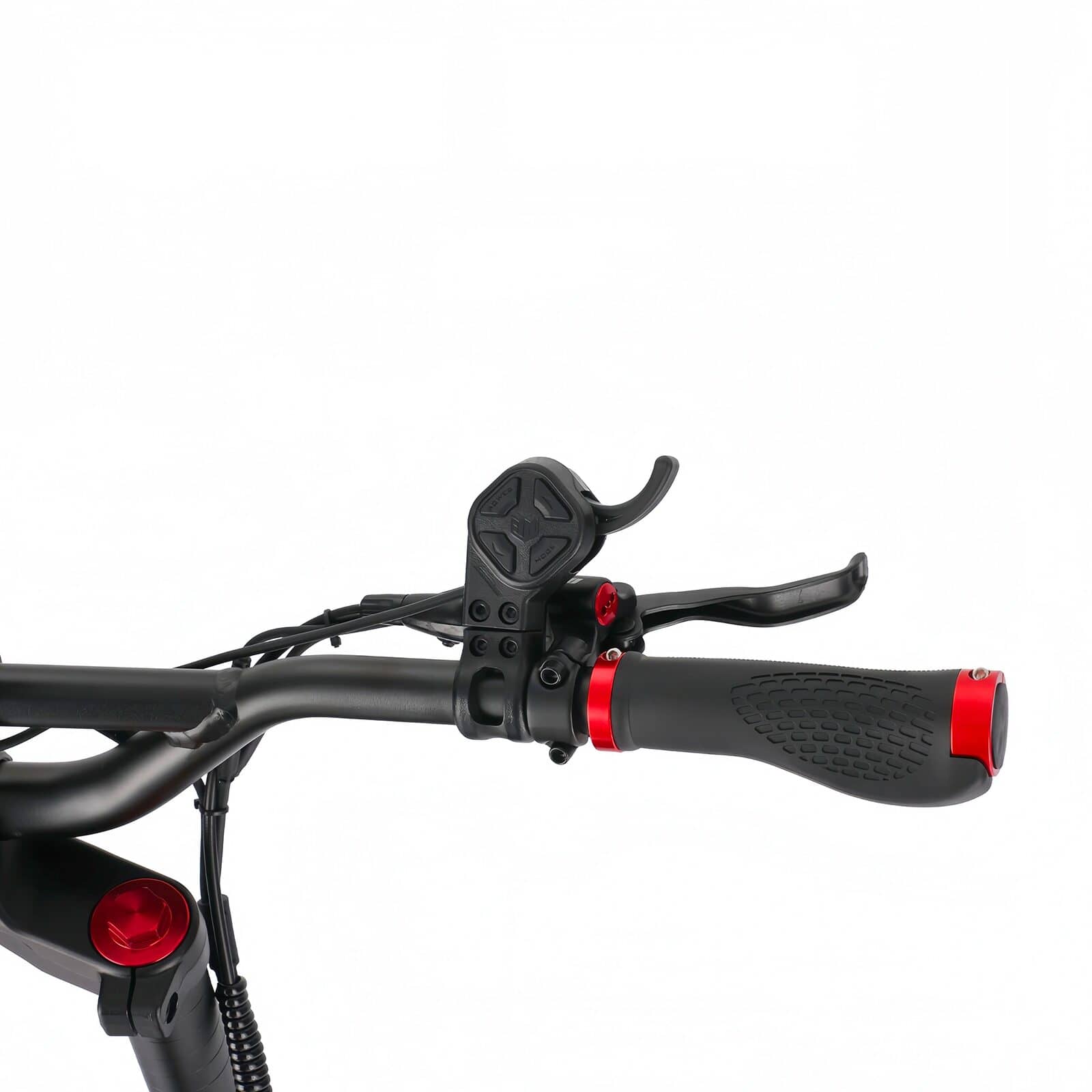
Close-up of a scooter handlebar showing the thumb throttle display unit, brake lever and black grip with red end caps.
Manufacturer photo: Kaabo USA

Manufacturer claims

Manufacturer claim

Published by the manufacturer. Not measured by RideBenchmark.

Top speed
62 mph
Peak power
8,400 W
Battery
72V 35Ah
Max range
112 miles
Climbing angle
50°
Max load
330 lb

Where to buy

Check price at Kaabo USA(opens in a new tab)

We may earn a commission if you buy through some links on this site. See our Affiliate Disclosure
02 / Electric dirt bike / e-moto

Owned & ridden· Owner experience
Illustration: side elevation of an electric dirt bikeOriginal RideBenchmark line drawing of a generic electric dirt bike over a terrain profile, with editorial callouts. Not a photograph of the 79Bike Falcon Pro.BATTERY + CONTROLLERSUSPENSION TRAVELTIRE + BRAKE WEARSEAT HEIGHT VS. RIDER
RideBenchmark illustration. Not a photo of the Falcon Pro.

79Bike Falcon Pro

Part of 79Bike’s Falcon series alongside the Falcon GT and Falcon Lite

The Falcon Pro is 79Bike’s mid-tier Falcon electric dirt bike, sitting between the Falcon Lite and the more powerful Falcon GT in the manufacturer’s own model comparison. The owner of this site rides a Falcon Pro — trim confirmed directly by the owner.

Electric dirt bikes raise questions scooters don’t: where you can legally ride, what protective gear the speed demands, and how drivetrain and suspension wear show up over time. Those are the questions our coverage is built around.

What we look at first

  1. 01Exact trim and model year — Falcon GT, Pro and Lite differ in power, battery and brakes
  2. 02Where a machine like this can be ridden legally where you live
  3. 03Weight, seat height and suspension travel versus rider size and experience
  4. 04Chain, brake and tire wear, and how easy parts are to source

Manufacturer claims

Manufacturer claim

Published by the manufacturer. Not measured by RideBenchmark.

Top speed1
56 mph
Peak power1
10 kW
Battery1
72V 35Ah (LG M50T cells)
Range2
75 miles
Torque1
410 N·m
Weight2
130 lb

The buying decision

Performance figures are the beginning of the conversation.

Top-speed and range claims can be useful starting points, but they rarely tell the whole ownership story. Weight, riding mode, hills, tire choice, weather, support, parts, charging, and the reality of transporting a heavy machine can change which ride makes sense for you.

  1. Real-world range vs. advertised range

    A “max range” figure is usually achieved at low speed, on flat ground, with a light rider. Ride in a faster mode, climb, carry more weight or ride in the cold and the number drops. Ask what conditions a claim was rated under before comparing two machines.

  2. Weight and transport

    Performance scooters and electric dirt bikes are heavy. Before you buy, think through the stairs, the elevator, the trunk or hitch rack, and who lifts it when it won’t roll.

  3. Brakes, handling and terrain

    Speed you can’t control is a liability. Look at brake type and rotor size, tire choice, suspension travel and stance — and match them to where you will actually ride.

  4. Reliability you can verify

    Single owner stories are not reliability data, and neither is silence. We say what we observed, cite what others document, and label the rest unknown.

  5. Spare parts and repair

    Tires, brake pads, controllers, chargers and suspension parts wear or fail. Check whether parts are sold in your country and whether anyone local will work on the machine.

  6. Warranty, shipping and total ownership

    Read the seller’s warranty terms, who pays freight on a return, and what the first year of tires, pads and protective gear will cost — not just the sticker price.

  7. Road and trail legality

    Rules for high-powered scooters and off-road e-motos vary by country, state and even trail system. Many of these machines are not street-legal. Check before you buy, not after.

  8. Protective equipment

    At these speeds, a full-face helmet, gloves, abrasion-resistant clothing and proper footwear are part of the purchase. Budget for them.

How to read us

Every claim tells you where it came from.

We distinguish what we have ridden, what a manufacturer says, what credible sources establish, and what remains unknown. You will see these labels next to the information they describe.

RideBenchmark evidence labels and what each one means
Owned & riddenThe owner has possessed and ridden this exact machine. Used for first-hand observations only — never for numbers that were not measured.
Hands-on testedA documented, repeatable evaluation with logged conditions and measurements. No RideBenchmark test has been published yet, so nothing on the site carries this label today.
ResearchedBuilt from official documents and credible third-party sources, linked and dated. It does not claim first-hand use.
Manufacturer claimA figure the brand publishes — top speed, range, power, weight. Attributed and dated. It describes what is promised, not what we measured.
Unknown / unverifiedWe could not confirm it. Unknown is not zero, and it is not proof of safety or reliability.
Read the full methodology

Before you buy

A buyer’s checklist you can use today.

No sign-up, no quiz. Print it, screenshot it, or take it to the seller.

01Product type and legality

  • Is this a scooter, an e-bike or an off-road motorcycle in the eyes of your local rules?
  • Where can you legally ride it — roads, bike lanes, private land, designated trails?

02Exact trim and year

  • Confirm the precise model name and trim on the listing and the spec label.
  • Check the model year or revision — battery, controller and brakes can change between versions.

03Range claims and test conditions

  • Ask what speed, rider weight, mode and terrain the range figure assumes.
  • Plan around a realistic fraction of the claim for your riding, not the headline number.

04Charger and battery

  • Note battery voltage and capacity, charge time and whether a faster charger is offered.
  • Find out how the battery is shipped, stored and replaced, and what it costs.

05Local service and parts

  • Is there a service center or a shop near you that will work on this brand?
  • Are tires, pads, tubes and common electrical parts sold in your country?

06Brakes, tires and suspension

  • Check brake type and rotor size against the top speed.
  • Choose the tire option that matches your surface — street, all-terrain or off-road.

07Returns, warranty and freight

  • Read the warranty: what is covered, for how long, and who does the work.
  • Find out who pays return freight on a machine this heavy, and how it gets crated.

08Protective gear and riding restrictions

  • Budget for a full-face helmet, gloves, jacket and boots before the first ride.
  • Check age limits and any rules for where and when you can ride.

On video

Real riding, on the Road to Trail channel.

Before RideBenchmark, there was riding footage. The owner’s YouTube channel, Road to Trail, holds older riding videos from first-hand time on performance electric rides.

We link the channel rather than embedding individual videos until each one has been checked for what it actually shows.

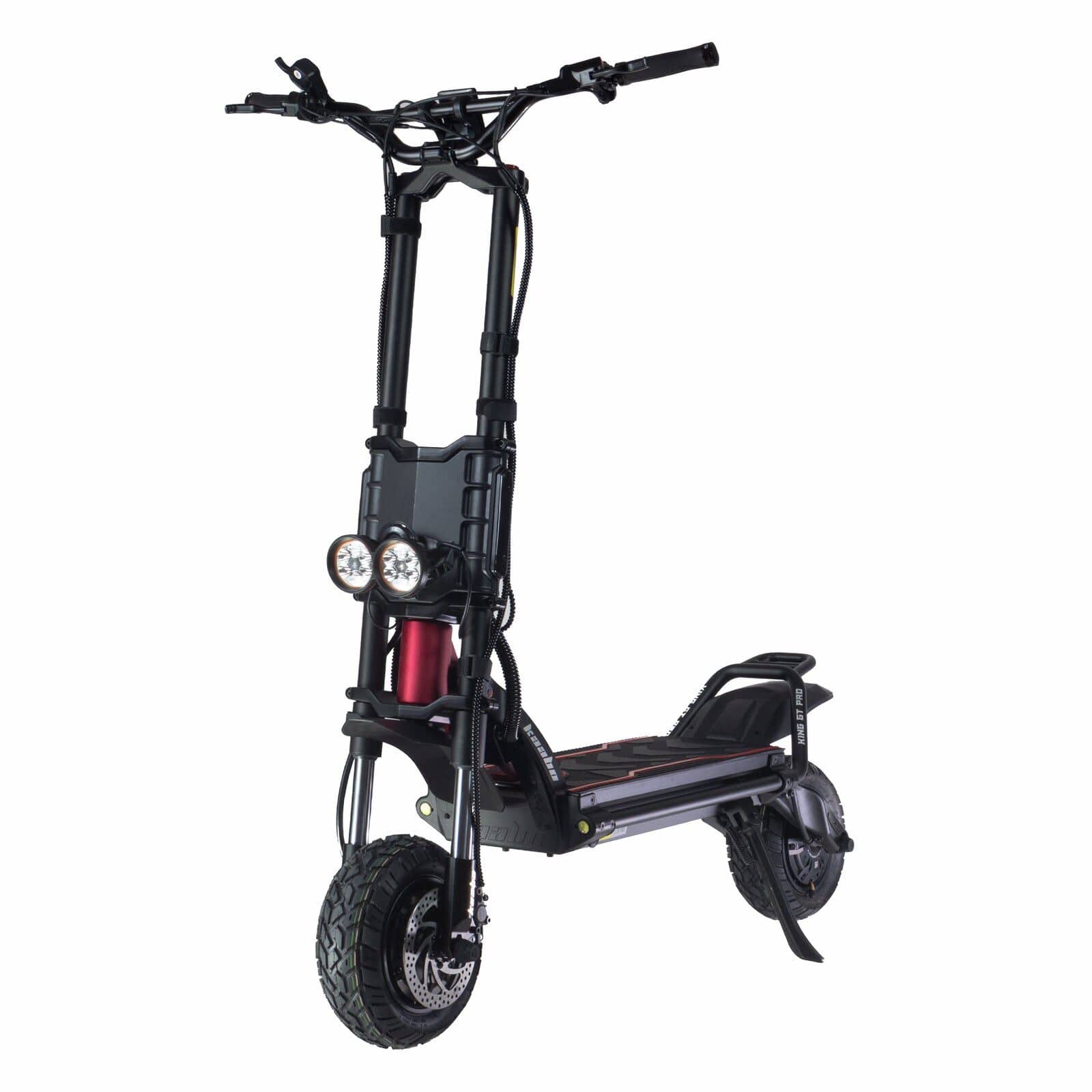
A black Kaabo King GT Pro scooter in three-quarter front view on a white studio background, showing twin headlights, a red rear shock and wide off-road tires.
Manufacturer photo: Kaabo USA

Our promise

Human, accountable, correctable.

RideBenchmark is a small, rider-led publication. We don’t invent test results, reviews or ratings, and we won’t let a commission decide which machine is right for you. If we get something wrong — a model name, a spec, a link — tell us and we’ll fix it in the open.

We may earn commissions through some purchase links. Those relationships don’t decide which machine is best for a reader. See our Affiliate Disclosure

Specifications on this page checked .

Know the tradeoffs before you spend thousands.

Start with the two machines we know, or watch them ridden.